The Science Behind Bidets: Are They Cleaner Than Toilet Paper?
Bidets have been standard in Japan, Europe, and much of the Middle East for decades. Americans are just catching up. And when you look at what the research actually says, it's hard to argue with the logic.
Here's the honest science behind why bidets clean better — and what to consider before making the switch.
How a Bidet Actually Works
A bidet uses a stream of water to clean the anal and genital areas after using the toilet. That's it. Instead of dragging dry paper across sensitive skin — which smears as much as it removes — water rinses waste away completely.
Modern bidets range from simple cold water attachments to electric seats with warm water, heated seats, adjustable pressure, and air drying. The cleaning principle is the same across all of them.
What the Research Says
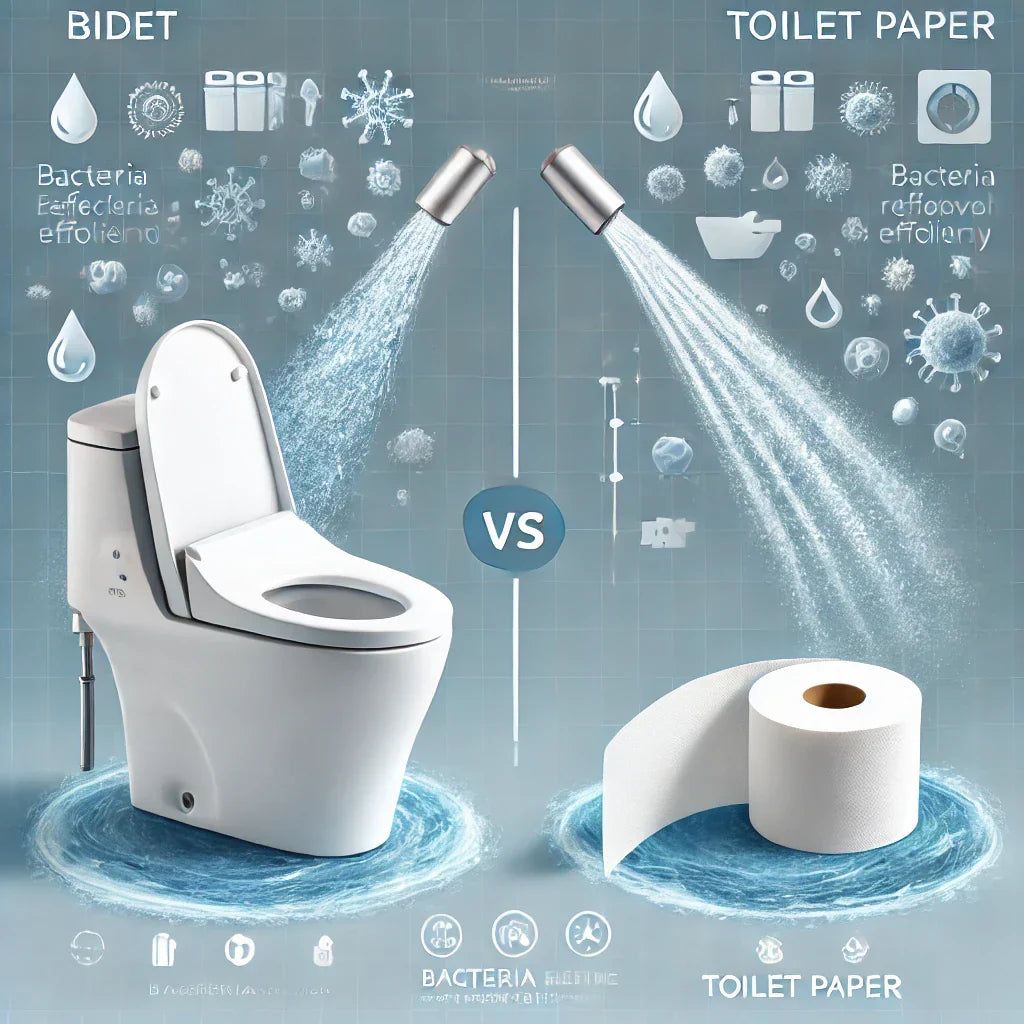
Water cleans better than paper. A study published in The Journal of Hospital Infection found that water-based cleansing significantly reduces bacterial contamination compared to dry wiping. Toilet paper leaves behind microscopic waste particles that paper simply can't remove.
Bidets reduce skin irritation. Repeated wiping causes friction, dryness, and small tears in sensitive skin — especially for people with hemorrhoids, IBS, or sensitive skin. Water eliminates the friction entirely.
Bidets may lower infection risk. For women especially, improper wiping can spread bacteria from the anal area toward the urethra, increasing UTI risk. A thorough water rinse reduces that significantly.
The Environmental Case
Americans use approximately 36.5 billion rolls of toilet paper per year according to National Geographic. Each roll requires about 37 gallons of water to produce and contributes to deforestation at scale.
A bidet uses roughly an eighth of a gallon per use. The math isn't close.
Fair Downsides to Mention
Cost — basic attachments start around $30. Electric seats with warm water run $300–$1,300. There's an option for every budget.
Cold water — non-electric bidets use cold water only. If that's a concern, an electric seat or the TUSHY Spa 3.0 (which connects to your sink's hot water line) solves it.
Adjustment period — most people feel awkward the first few uses. Almost everyone prefers it within a week.
Where to Start
If you've never used a bidet, a non-electric attachment is the easiest entry point — under $80, installs in 10 minutes, no plumber needed.
SAMODRA Ultra-Thin — America's best-selling budget bidet attachment.
bidetworld.com/products/samodra-new-bidet-toilet-seat-attachment-toilet-bidet-sprayer-ultra-thin-3-funtions-ass-bidet-shower-hygienic-wash-for-bathroom (http://bidetworld.com/products/samodra-new-bidet-toilet-seat-attachment-toilet-bidet-sprayer-ultra-thin-3-funtions-ass-bidet-shower-hygienic-wash-for-bathroom)
TUSHY Classic 3.0 — 47,000+ reviews, the most trusted name in bidet attachments.
bidetworld.com/products/tushy-classic-3-0-bidet (http://bidetworld.com/products/tushy-classic-3-0-bidet)
TUSHY Spa 3.0 — warm water version, connects to your sink supply line.
bidetworld.com/products/tushy-spa-3-0-bidet (http://bidetworld.com/products/tushy-spa-3-0-bidet)
Ready for an electric upgrade? The Nova ECO gives you warm water, heated seat, and air dry for $699.
bidetworld.com/products/eco-nova (http://bidetworld.com/products/eco-nova)
Browse the full bidet collection at Bidet World: bidetworld.com/collections/all (http://bidetworld.com/collections/all)
Share:
Bidet Myths Debunked: The Truth About Water Waste
Toilet Lifts vs. Traditional Toilet Assistance